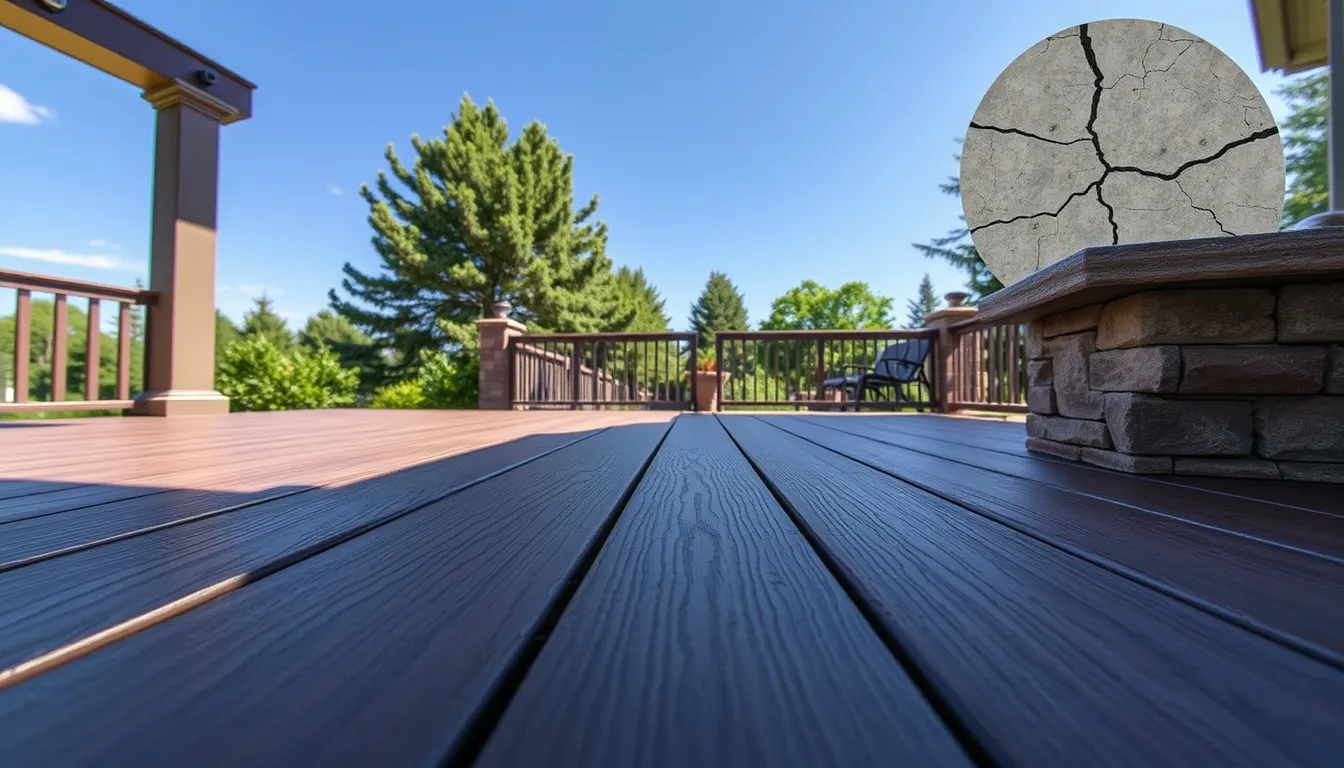
If you are planning a patio, generic advice often fails. Choosing the right surface depends entirely on your local weather patterns, not just aesthetics. This guide helps you match material properties to specific climate stressors like UV exposure, humidity, and temperature swings.
You will learn how to assess porosity and freeze-thaw cycle risks to avoid common mistakes, such as installing indoor-grade stone outdoors. We focus on practical durability, helping you select materials that resist degradation without requiring constant sealant applications.
Understanding Climate Stressors: More Than Just Rain
Outdoor materials are constantly fighting a trio of invisible forces that work together to erode their appearance and structure. The first is UV radiation—the sun’s high‑energy light that, over time, bleaches pigments, weakens polymers, and breaks down surface bonds. Even a stone that looks solid can develop a dull, sun‑scorched patina when exposed to relentless daylight.
Second is moisture absorption. Water seeps into pores, and when temperatures drop, that water turns to ice. The ice expands, exerting pressure on the material’s micro‑cracks. Repeated freeze‑thaw cycles can widen those cracks, eventually leading to spalling or complete loss of structural integrity.
The third enemy is temperature fluctuation. As the day warms and the night cools, materials expand and contract. Those movements are governed by the coefficient of thermal expansion. If a material’s expansion rate is too high compared to its neighbors, joints can fail, seams can split, and the overall assembly may buckle.
When we talk about a patio being weather‑resistant, we mean it can slow the progression of these three processes. It doesn’t halt UV fading, freeze‑thaw damage, or thermal expansion entirely; it simply reduces their rate so that the surface remains usable and attractive for many years without frequent, aggressive sealant applications.
Evaluating Natural Stone and Concrete Options
When selecting natural stone, porosity is the critical metric for durability. Dense stones like granite have tightly packed mineral structures that resist water absorption, making them highly effective against the freeze-thaw cycle. In contrast, limestone is significantly more porous. If water penetrates limestone and freezes, the expanding ice can cause the surface to spall or crack. This is why using indoor-grade stone outdoors is a common mistake; materials not rated for exterior use often lack the density required to handle repeated moisture exposure.
Concrete pavers offer versatility but require different handling. Unlike dense natural stones, standard concrete is permeable by design. Without a proper sealant, concrete is vulnerable to staining, efflorescence, and rapid degradation from UV rays and moisture. High-quality sealants penetrate the pores to repel water, but they degrade over time due to UV stability limits. Regular reapplication is necessary to maintain the protective barrier, especially in regions with intense sunlight or heavy rainfall.
Material choice alone does not guarantee a long-lasting patio. Proper base preparation is a structural requirement, not an optional step. If the soil beneath the pavers shifts or settles unevenly, even the most weather-resistant material will crack. The sub-base must be compacted and stable to distribute weight evenly. Additionally, you must consider the coefficient of thermal expansion. Materials expand when heated and contract when cooled. Without adequate spacing joints, this movement creates internal stress that leads to cracking. Ensuring the substrate is level and the joints are correctly sized prevents these structural failures, ensuring the patio remains flat and intact regardless of seasonal temperature swings.
The Role of Composite and Engineered Wood
Composite decking and engineered wood have gained popularity as alternatives to natural timber, primarily due to their resistance to biological degradation. Unlike untreated natural wood, these materials are inherently impervious to rot and insect damage. This eliminates the need for regular chemical treatments that protect against termites and fungal growth. However, this durability comes with a different set of climate challenges, particularly regarding UV stability.
Over time, exposure to direct sunlight can cause composite surfaces to fade or discolor. The pigments in these materials may break down under constant UV radiation, leading to a loss of the original color depth. This is a cosmetic issue rather than a structural one, but it significantly affects the aesthetic longevity of the patio. To mitigate this, manufacturers incorporate UV stabilizers into the material. Because quality varies significantly between brands, checking the specific UV stabilizer content is crucial. A material with robust UV protection will maintain its appearance for years, while a lower-quality option may look weathered quickly.
The economic trade-off favors composites in terms of long-term maintenance. You avoid the recurring costs and labor associated with staining or sealing natural wood. There is no need to apply a sealant annually to prevent moisture absorption. Instead, the initial investment is higher, but the ongoing commitment is minimal. Cleaning typically involves just a hose or mild soap. When evaluating options, consider the coefficient of thermal expansion. Composites expand and contract with temperature changes, so proper installation spacing is vital to prevent warping. While they do not require the porosity management that stone or concrete demands, they still need adequate airflow and drainage to prevent moisture trapping beneath the surface.
Matching Material to Your Local Weather Patterns
Start by identifying the dominant stressor in your specific location, not just the general climate zone. A humid subtropical region differs significantly from a coastal area with similar temperatures due to salt exposure. In high-humidity environments, prioritize materials with very low porosity. Mold and mildew thrive in damp, porous surfaces. Non-porous options like sealed concrete or certain composites resist biological growth better than untreated natural stone. Ensure drainage slopes away from structures to prevent standing water, which exacerbates moisture retention.
For regions experiencing frequent freeze-thaw cycles, absorption is the critical metric. Water trapped in pores expands upon freezing, generating internal pressure that cracks material. Select options with minimal porosity or apply penetrating sealants regularly. Check the coefficient of thermal expansion to ensure joints can accommodate movement without forcing the material apart. Rigid materials with poor drainage are prime candidates for spalling in these zones.
In arid, high-UV climates, heat management and color stability matter most. Dark materials absorb significant heat, making surfaces uncomfortably hot and potentially accelerating degradation. Look for high UV stability ratings to prevent fading and brittleness. Lighter colors reflect solar radiation, reducing thermal stress on the material. Avoid untreated woods that check and split under intense sun exposure.
Finally, consider seasonal variation. If your area swings between wet winters and dry summers, prioritize dimensional stability. Materials that handle both moisture saturation and rapid drying without warping or cracking are ideal. Match the material’s inherent properties to your specific weather patterns rather than relying on generic recommendations.
Maintenance Realities: What ‘Low-Maintenance’ Actually Means
Marketing labels often obscure the true cost of ownership. When a material is described as low-maintenance, it rarely implies zero effort. Instead, it suggests a reduced frequency of intensive tasks, such as skipping annual sealant applications or avoiding deep chemical cleaning. Understanding this distinction is critical before committing to a specific surface.
Consider the physical impact of daily use. Foot traffic generates abrasion that smooths textured surfaces over time. Furniture legs, particularly if moved frequently, can leave permanent indentations in softer composites or concrete. These mechanical stresses are independent of weather exposure but directly affect longevity. A durable material will resist chipping under impact, but it still requires basic care to remain visually appealing.
Before finalizing your choice, assess your actual willingness to perform routine tasks. Ask yourself what level of upkeep is acceptable. Do you mind sweeping debris weekly to prevent organic growth in porous materials? Are you comfortable hosing down the patio after heavy dust or pollen seasons? If you live in a humid climate, you must also plan for occasional resealing to maintain UV stability and prevent moisture ingress. Ignoring these small, recurring tasks leads to premature degradation, regardless of the material’s initial quality.
Match the maintenance profile to your lifestyle. If you prefer a hands-off approach, prioritize dense, non-porous options that do not require regular sealant. If you are willing to invest an hour a month in cleaning and inspection, you have a broader range of high-performance materials available. Clarity about your own capacity for care ensures the chosen surface remains functional and attractive for years, rather than becoming a source of frustration due to unexpected upkeep demands.